
Administrator
Administrator

- Thread starter
- #1
Your Electric Truck Can Power Your Home. Ford Fathom Makes It More Affordable.

October 27, 2026
Having a battery parked right in your driveway can bring greater peace of mind.
That's the promise of bidirectional power: a technology that enables energy to flow both ways, turning an electric vehicle (EV) into mobile energy storage.
Simply stated, the vehicle takes in power to charge its battery and can send that same power back to the home. But getting this technology to scale has not happened yet.
Cost has been the biggest obstacle. EV batteries store power as direct current (DC), but homes use alternating current (AC), and converting between the two has traditionally required costly external equipment like a home inverter.
That price tag kept the technology limited to premium vehicles and the hands of early adopters.
Until now.
In 2027, the all-new Ford Fathom™ electric truck will start at $28,350 MSRP and offer available bidirectional AC power. That means it does not need a separate wall-mounted inverter to supply over a projected 10 kW of AC power to a home.

Two Ways Fathom Can Power Your Home
For Fathom customers, that two-way flow of electricity can work in two ways:

A Premium Technology Now More Affordable
Our goal wasn't just to add bidirectional power to our EVs. It was to redesign the system to cost far less so more people can access bidirectional power.
With Fathom offering bidirectional power at an MSRP starting below $30,000, even more people can benefit from potential energy savings and home backup power.
Let's Get Plugged In
The breakthrough moment for bidirectional power is nearly here. Fathom will be available in 2027.
Want to be among the first to know when Fathom preorders open? Get your preorder invite.
ADDENDUM - added writeup by @rileyfromford (posted in thread below)
October 27, 2026
Having a battery parked right in your driveway can bring greater peace of mind.
That's the promise of bidirectional power: a technology that enables energy to flow both ways, turning an electric vehicle (EV) into mobile energy storage.
Simply stated, the vehicle takes in power to charge its battery and can send that same power back to the home. But getting this technology to scale has not happened yet.
Cost has been the biggest obstacle. EV batteries store power as direct current (DC), but homes use alternating current (AC), and converting between the two has traditionally required costly external equipment like a home inverter.
That price tag kept the technology limited to premium vehicles and the hands of early adopters.
Until now.
In 2027, the all-new Ford Fathom™ electric truck will start at $28,350 MSRP and offer available bidirectional AC power. That means it does not need a separate wall-mounted inverter to supply over a projected 10 kW of AC power to a home.
Two Ways Fathom Can Power Your Home
For Fathom customers, that two-way flow of electricity can work in two ways:
- Saving Money on Home Electricity Bills: Home Power Management lets Fathom customers charge the vehicle's battery when electricity is less expensive and use it to power their home when electricity is more expensive, which may help lower customers' monthly electricity bills. The only hardware required is Ford's Home Power Station, which is expected to cost about half as much as our first-generation bidirectional charger, along with an active plan or trial.
- Keeping the Lights On: Home Backup Power lets Fathom send power to a customer's home when the power goes out. It's a clean, quiet alternative to traditional backup generators that run on natural gas or diesel. Customers will need the Ford Home Power Station and Ford Home Backup Power Panel, which is expected to cost at least 60% less than our first-generation home backup hardware.2
A Premium Technology Now More Affordable
Our goal wasn't just to add bidirectional power to our EVs. It was to redesign the system to cost far less so more people can access bidirectional power.
With Fathom offering bidirectional power at an MSRP starting below $30,000, even more people can benefit from potential energy savings and home backup power.
Let's Get Plugged In
The breakthrough moment for bidirectional power is nearly here. Fathom will be available in 2027.
Want to be among the first to know when Fathom preorders open? Get your preorder invite.
ADDENDUM - added writeup by @rileyfromford (posted in thread below)
Hey all, Riley from the Ford UEV team here. Bidirectional power has come up in almost every "what would make or break Fathom for you" thread on Reddit and these forums since August (yes, I've been watching  ). Today I can finally start to get into it properly.
The short version: Fathom will be the first EV from a U.S. automaker with an MSRP under $30K that can send more than 10 kW of AC power to your home without a separate wall-mounted inverter.
Why that's a big deal (the nerdy part, briefly): Your EV battery stores DC. Your house runs on AC. Something has to convert between the two, and that's usually been a pricier piece of equipment mounted in your garage.
On Fathom, the inverter lives inside the truck, in a module we call the E-box (one of the vehicle's five main modules). The team started from scratch on this. The goal wasn't just to add bidi but to redesign it so it is affordable, with fewer parts that do more.
What you'd actually use it for
Lowering your electric bill (Home Power Management): Charge the truck when electricity rates are lower. Run your house off it when rates are higher. Whether this saves you money, and how much, depends on your utility's rates. The only hardware you need is the Ford Home Power Station and is half the cost of our first-generation bidirectional charger.
Keeping the lights on (Home Backup Power): If the grid goes down, Fathom help to power your house. It's clean and quiet, with no gas or diesel generator running in the driveway. You'll need the Home Power Station plus the Ford Home Backup Panel, which together is aiming to be more affordable than our first-gen home backup hardware.
What I can't tell you yet, and why
Exact hardware prices. Those numbers aren't final. I'll post final prices closer to reveal.
Certification. The system is designed to meet UL 1741 and IEEE 1547. We're working through certification and validation right now.
Using it with the grid where you live. That's up to your local utility. There are more than 3,000 utilities across the U.S. and Canada, and most of their rules were written for solar panels and home batteries, not trucks. In July we started a working group with American Electric Power, BC Hydro, Consumers Energy, Exelon and PG&E to help agree on principles that would make that process easier before Fathom ships.
Dave McCreadie, who leads our Grid & Energy Services team, wrote more here. If you ask something I can't answer well, I'll take it to his team and come back to this thread.
So I'm curious, would you use this to save money, as an outage plan, or both? If you're on time-of-use rates, tell me what your peak and off-peak look like. I'd like to see how much the math changes from place to place.
). Today I can finally start to get into it properly.The short version: Fathom will be the first EV from a U.S. automaker with an MSRP under $30K that can send more than 10 kW of AC power to your home without a separate wall-mounted inverter.
Why that's a big deal (the nerdy part, briefly): Your EV battery stores DC. Your house runs on AC. Something has to convert between the two, and that's usually been a pricier piece of equipment mounted in your garage.
On Fathom, the inverter lives inside the truck, in a module we call the E-box (one of the vehicle's five main modules). The team started from scratch on this. The goal wasn't just to add bidi but to redesign it so it is affordable, with fewer parts that do more.
What you'd actually use it for
Lowering your electric bill (Home Power Management): Charge the truck when electricity rates are lower. Run your house off it when rates are higher. Whether this saves you money, and how much, depends on your utility's rates. The only hardware you need is the Ford Home Power Station and is half the cost of our first-generation bidirectional charger.
Keeping the lights on (Home Backup Power): If the grid goes down, Fathom help to power your house. It's clean and quiet, with no gas or diesel generator running in the driveway. You'll need the Home Power Station plus the Ford Home Backup Panel, which together is aiming to be more affordable than our first-gen home backup hardware.
What I can't tell you yet, and why
Exact hardware prices. Those numbers aren't final. I'll post final prices closer to reveal.
Certification. The system is designed to meet UL 1741 and IEEE 1547. We're working through certification and validation right now.
Using it with the grid where you live. That's up to your local utility. There are more than 3,000 utilities across the U.S. and Canada, and most of their rules were written for solar panels and home batteries, not trucks. In July we started a working group with American Electric Power, BC Hydro, Consumers Energy, Exelon and PG&E to help agree on principles that would make that process easier before Fathom ships.
Dave McCreadie, who leads our Grid & Energy Services team, wrote more here. If you ask something I can't answer well, I'll take it to his team and come back to this thread.
So I'm curious, would you use this to save money, as an outage plan, or both? If you're on time-of-use rates, tell me what your peak and off-peak look like. I'd like to see how much the math changes from place to place.
Last edited:






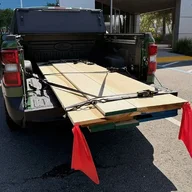

 9.6KW pro power or something along those lines would be amazing with 120V & 240V plugs.


